Private label manufacturing has become one of the fastest-growing models in the global fashion and apparel industry. From emerging D2C brands to established retailers, more businesses are choosing to build their own labels rather than rely on generic sourcing.
India has emerged as a preferred destination for private label textile manufacturing due to its manufacturing depth, skilled workforce, and export-ready ecosystem. However, success in private label sourcing depends on understanding how the process works, what to expect from manufacturers, and how to evaluate the right partner.
This guide explains how private label textile manufacturing works in India, what global brands should consider before partnering, and how to approach sourcing with clarity and confidence.
What Is Private Label Textile Manufacturing?
Private label textile manufacturing refers to a model where a manufacturer produces fabrics or garments that are branded and sold under the buyer’s own label. The manufacturer does not sell these products under its own name and works exclusively according to the buyer’s specifications.
This model allows brands to:
- Control branding and positioning
- Maintain product exclusivity
- Build long-term customer loyalty
- Scale faster without owning manufacturing infrastructure
In India, private label manufacturing spans fabrics, garments, and finished apparel, making it suitable for both wholesalers and consumer-facing brands.
Why Global Brands Choose India for Private Label Manufacturing
India’s strength lies in its ability to support private label manufacturing at scale while maintaining flexibility.
Manufacturing Depth and Integration
India offers a vertically integrated textile ecosystem, covering:
- Yarn and fabric production
- Knitted and garment manufacturing
- Dyeing, finishing, and packaging
This reduces dependency on multiple vendors and gives buyers better control over timelines and quality.
Skilled Workforce and Experience
Many Indian textile hubs operate on generational expertise. Manufacturers are familiar with international quality expectations, export documentation, and buyer compliance requirements.
Cost Efficiency Without Compromising Quality
India provides competitive pricing while allowing room for quality control, customization, and ethical manufacturing—key factors for private label success.
How Private Label Textile Manufacturing Works in India
Understanding the process helps brands avoid misalignment and delays.
1. Product Definition and Specifications
The buyer defines:
- Fabric type and construction
- GSM, composition, and finishes
- Sizing, fit, and performance requirements
- Branding and labeling guidelines
Clear documentation at this stage prevents confusion later.
2. Sampling and Development
Manufacturers develop samples based on the buyer’s inputs. This phase includes:
- Fabric swatches
- Fit and construction samples
- Wash and performance testing
Sampling is critical and should never be rushed.
3. MOQ and Pricing Alignment
Minimum order quantities are discussed based on:
- Fabric type and customization
- Number of styles and colors
- Production efficiency
Reliable manufacturers explain MOQs transparently instead of offering unrealistic flexibility.
4. Bulk Production
Once samples are approved, production begins following defined timelines and quality checkpoints.
5. Quality Control and Dispatch
In export-ready setups, quality checks are conducted during and after production, followed by packaging and shipment preparation.
Key Considerations for Global Brands
Private label manufacturing requires more involvement than standard sourcing. Brands should evaluate manufacturers on the following parameters:
Product Development Capability
A strong private label partner understands fabrics, construction, and performance—not just execution.
Quality Control Systems
Manufacturers should have:
- In-process quality checks
- Final inspection protocols
- Documentation for traceability
Communication and Transparency
Clear communication on timelines, limitations, and changes is essential for long-term collaboration.
Export Experience
Manufacturers should be familiar with international shipping, compliance, and documentation requirements.
Common Mistakes Brands Make in Private Label Sourcing
Many private label projects fail due to avoidable issues.
- Treating manufacturers as vendors rather than partners
- Rushing sampling to meet launch deadlines
- Ignoring MOQ and process constraints
- Choosing suppliers based only on price
Private label manufacturing works best when expectations are aligned early and decisions are made with a long-term view.
The Role of Trust in Private Label Manufacturing
Unlike open-market sourcing, private label manufacturing involves sharing designs, specifications, and brand vision. This makes trust and reliability non-negotiable.
Manufacturers who value long-term partnerships typically:
- Respect confidentiality
- Maintain consistent quality
- Invest time in understanding buyer goals
This is why many global brands prefer working with established Indian manufacturers rather than chasing short-term cost advantages.
About Revive by SNG Enterprises
Revive by SNG Enterprises is a Ludhiana-based textile manufacturer with decades of experience supporting domestic and international buyers. Operating from one of India’s most established textile hubs, Revive specializes in knitted fabric manufacturing and private label production.
With a strong focus on process clarity, quality consistency, and export readiness, Revive works closely with brands to support private label development—from sampling to bulk production.
Connect with Revive by SNG Enterprises to discuss your private label requirements and sourcing strategy.
How Global Brands Should Approach Private Label Manufacturing in India
Before finalizing a manufacturer, brands should:
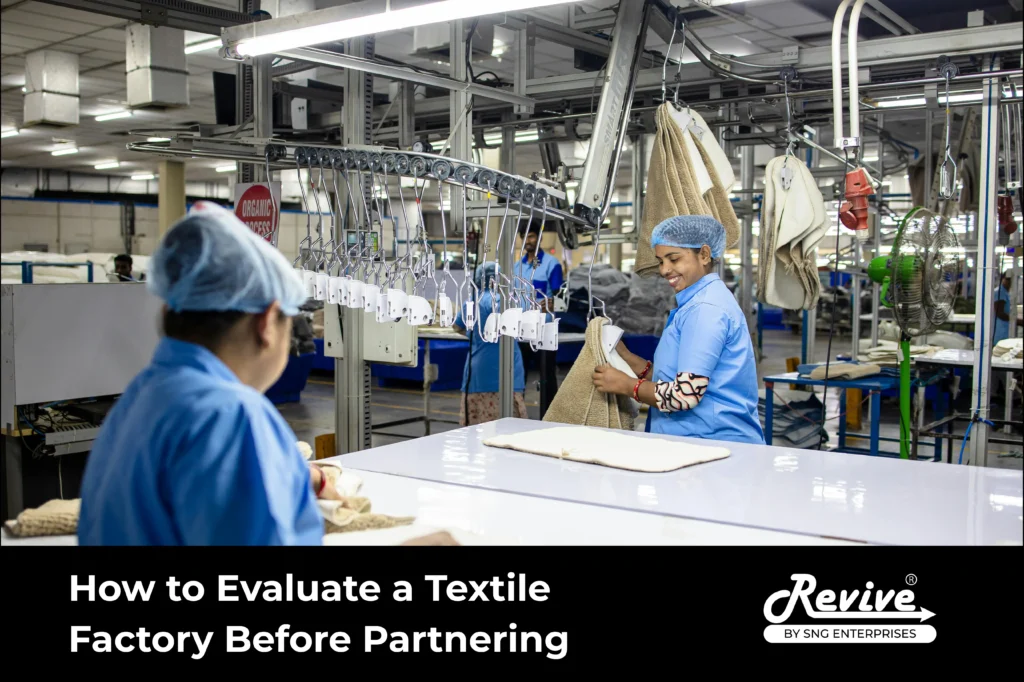
- Conduct physical or virtual factory evaluations
- Review samples thoroughly
- Align on timelines, MOQs, and quality standards
- Establish clear communication channels
Private label success depends as much on the relationship as on the product.
FAQs: Private Label Textile Manufacturing in India
1. What is private label textile manufacturing?
It is a model where manufacturers produce fabrics or garments exclusively under the buyer’s brand name, based on custom specifications.
2. Is India suitable for private label manufacturing?
Yes. India offers manufacturing depth, skilled labor, export experience, and cost efficiency, making it ideal for private label sourcing.
3. What is the typical MOQ for private label orders in India?
MOQs vary based on fabric type, customization, and production complexity. Reliable manufacturers explain MOQ requirements clearly during discussions.
4. How long does private label production take in India?
Timelines depend on sampling, approvals, and order size. Export-ready manufacturers provide structured lead times rather than vague estimates.
5. Can small or emerging brands work with Indian manufacturers?
Yes, provided expectations are realistic and aligned. Many manufacturers support growing brands through phased scaling.
6. How can buyers ensure quality in private label manufacturing?
By evaluating quality control systems, reviewing samples, and conducting factory audits before bulk production.
Conclusion
Private label textile manufacturing offers global brands the opportunity to build differentiated products, control branding, and scale efficiently. India’s textile ecosystem provides the infrastructure and expertise needed to support this model—but success depends on choosing the right manufacturing partner.
By understanding the process, setting clear expectations, and working with experienced manufacturers, brands can build private label programs that are both reliable and scalable.
If you are exploring private label textile manufacturing in India, connect with Revive by SNG Enterprises to start a clear, informed conversation.
Author Bio
Written by: Seerat Kochhar
Seerat Kochhar is a content strategist focused on textiles, manufacturing, and global sourcing. Working closely with Revive by SNG Enterprises, a Ludhiana-based textile manufacturer, Seerat helps brands navigate India’s textile landscape through practical, research-driven content designed for long-term decision-making.