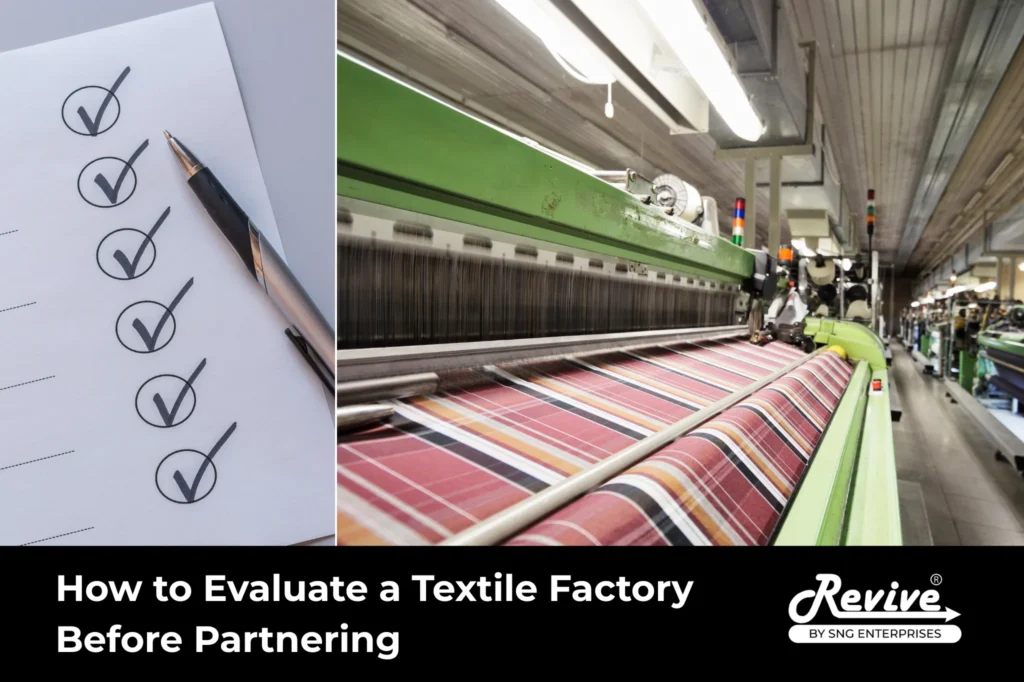
Choosing the right textile factory is one of the most critical decisions a fashion brand, wholesaler, or importer will ever make. The quality of your garments, delivery timelines, brand reputation, and even customer trust depend on this single partnership.
Yet, many brands rush into collaborations based on pricing, glossy brochures, or sales promises, only to face quality inconsistencies, delays, or compliance issues later. That’s why a proper evaluation of a textile factory is not optional; it’s essential.
Whether you’re sourcing from a textile factory in Ludhiana or anywhere else in India, this guide will help you assess suppliers with clarity and confidence—before you commit.
Why Factory Evaluation Matters More Than Ever
In today’s competitive apparel market, buyers are no longer just looking for manufacturers. They’re looking for long-term partners who can deliver consistency, scalability, and reliability.
A thorough garment factory audit in India helps you:
- Reduce production risks
- Avoid costly quality failures
- Ensure ethical and compliant manufacturing
- Build a stable supply chain
For brands exporting internationally, factory evaluation also ensures compliance with global standards, something buyers and regulators increasingly demand.
Step 1: Understand the Factory’s Core Capabilities
Before anything else, understand what the factory actually does best.
Ask:
- Do they specialize in fabrics, garments, or both?
- Are they focused on knitted, woven, or blended textiles?
- Do they handle in-house processes or outsource key steps?
A reliable factory will clearly explain its fabric manufacturing process, from yarn sourcing to finishing. Be cautious of suppliers who claim to “do everything” without demonstrating depth in any area.
Tip: A focused factory is often more reliable than a generalist.
Step 2: Evaluate the Fabric Manufacturing Process
Your product is only as good as the fabric it’s made from. Understanding the factory’s fabric manufacturing process is crucial.
Key areas to assess:
- Yarn sourcing: Where is the yarn sourced from? Is it consistent and certified?
- Knitting or weaving: What machines are used? Are they modern and well-maintained?
- Dyeing & finishing: Are shrinkage, colorfastness, and pilling tested?
- Quality control: Is fabric tested before cutting or dispatch?
Factories in established hubs like Ludhiana often have an advantage due to access to skilled labor, raw materials, and advanced machinery—but don’t assume quality without verification.
Step 3: Conduct a Garment Factory Audit (Physical or Virtual)
A garment factory audit in India is one of the most effective ways to verify a supplier’s claims.
If you can visit in person, great. If not, a virtual factory tour is the next best option—and widely accepted today.
During the audit, look for:
- Clean, organized production floors
- Clearly defined process flow
- Adequate safety measures
- Separate areas for cutting, stitching, finishing, and packing
- In-house quality control teams
A transparent factory will happily walk you through operations and answer technical questions. Hesitation or resistance is a red flag.
Book a Virtual SNG Enterprises Factory Tour to see operations before you partner.
Step 4: Check Quality Control Systems
Many factories promise quality—but few have systems to guarantee it.
Ask:
- How many quality checkpoints exist during production?
- Is fabric checked before cutting?
- Are inline and final inspections conducted?
- What happens if defects are found?
Strong factories follow preventive quality control, not just final inspection. This reduces rework, delays, and wastage.
Pro tip: Ask for actual QC reports or test results, not just verbal assurances.
Step 5: Assess Compliance & Certifications
Compliance isn’t just about ethics—it’s about protecting your brand.
Key areas to verify:
- Labor practices and worker safety
- Working hours and wage compliance
- Environmental responsibility
Common certifications include:
- ISO standards
- OEKO-TEX for fabric safety
- Social compliance audits (as applicable)
Even if you don’t require certifications immediately, partnering with a compliant factory future-proofs your supply chain—especially for exports.
Step 6: Review Production Capacity & Scalability
A factory that can handle 5,000 units may struggle with 50,000—and that matters if your brand grows.
Discuss:
- Monthly production capacity
- Peak season load handling
- Ability to scale without compromising quality
- Backup machinery or contingency planning
Textile hubs like Ludhiana are known for scalable infrastructure, but capacity must be validated for your specific product type.
Step 7: Understand Lead Times & Reliability
Timelines can make or break retail launches.
Ask:
- Standard lead time for sampling and bulk orders
- Historical on-time delivery performance
- How delays are communicated and handled
A professional factory will give realistic timelines, not optimistic promises.
Remember: reliability beats speed.
Step 8: Evaluate Communication & Transparency
Good manufacturing partnerships rely on clear communication.
Look for:
- A dedicated point of contact
- Clear documentation and written commitments
- Responsiveness to technical and commercial queries
If communication is unclear before you place an order, it rarely improves after.
Step 9: Ask for Samples & References
Never skip sampling.
Evaluate:
- Fabric hand feel and GSM consistency
- Stitching quality and finishing
- Fit accuracy and wash performance
Also ask for:
- Existing client references
- Export experience (if relevant)
A confident factory won’t hesitate to share past work.
Step 10: Align on Expectations Before Signing
Before finalizing:
- Confirm pricing structure
- Lock quality standards
- Define rework or rejection policies
- Agree on payment terms
Everything should be documented, not assumed.
If you’re still early in your sourcing journey, this pillar guide can help:
Internal Link: Choosing the right garment manufacturer in India
Why Ludhiana Is a Key Textile Hub
When evaluating suppliers, location matters.
A textile factory in Ludhiana benefits from:
- Generational expertise in fabrics and garments
- Skilled labor availability
- Strong raw material access
- Established export ecosystem
This is why Ludhiana remains a preferred sourcing destination for domestic and international brands alike.
Takeaway:
Evaluating a textile factory is not about mistrust but about clarity. The more you understand a supplier’s processes, systems, and values, the stronger your partnership will be.
By conducting a structured evaluation, covering the fabric manufacturing process, quality systems, audits, and communication, you reduce risk and build a supply chain that supports long-term growth.
Before you commit, always see how your future partner works.
Book a Virtual SNG Enterprises Factory Tour and evaluate your next textile partner with confidence.
About Revive by SNG Enterprises
With 50+ years of experience in India’s textile ecosystem, Revive by SNG Enterprises is a trusted name for brands looking to partner with a reliable and transparent manufacturing setup. Based in Ludhiana — one of India’s most established textile hubs. Revive by SNG Enterprises specializes in knitted fabric manufacturing, supporting fashion brands, wholesalers, and exporters with consistent quality and scalable production.
What sets Revive apart is its process-driven approach. From a clearly defined fabric manufacturing process to in-house quality checks and export-ready operations, the focus remains on long-term partnerships rather than transactional orders. Brands working with Revive value the clarity, communication, and accountability that come from working with a factory that understands both technical textiles and business realities.
If you’re evaluating a textile factory and want to understand how a professional setup operates without pressure or commitment; a direct conversation can often answer more than brochures or emails.
Chat with the Revive by SNG Enterprises team on WhatsApp
https://wa.me/919872432426